

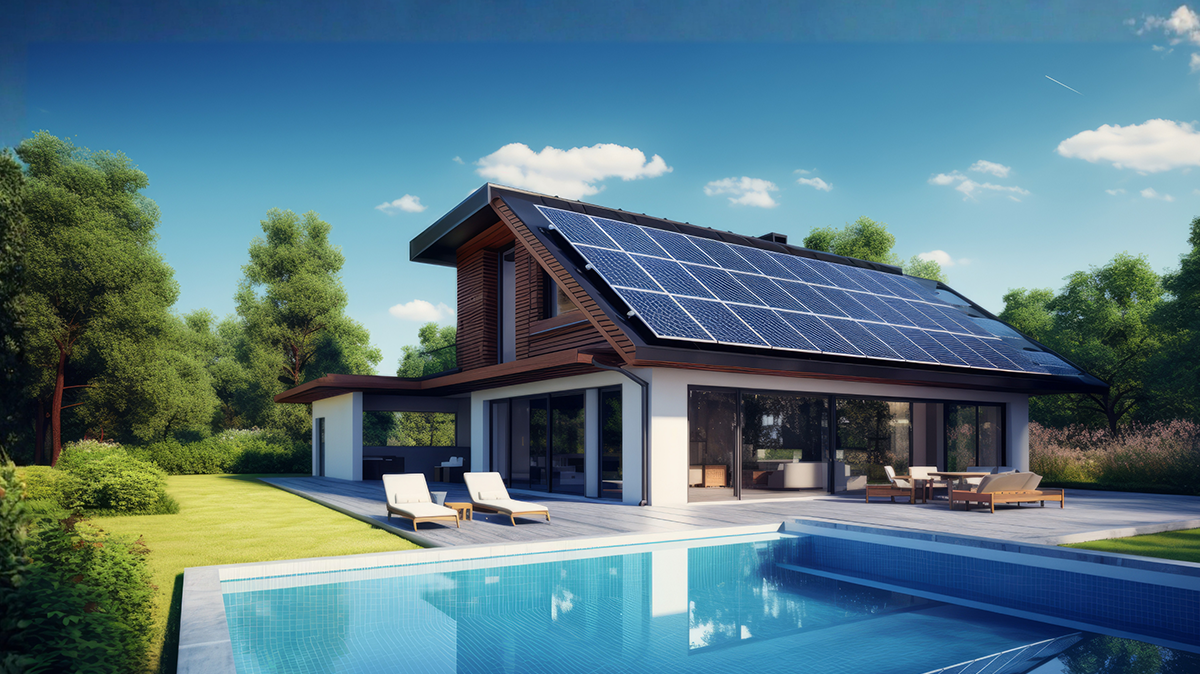

In this Story
Share


Navigating India’s Residential Solar Landscape
Everyone selling solar claims to have the "best" panel, highest efficiency, longest warranty, lowest price per watt. The numbers pile up fast, and it's hard to tell which ones actually matter for your rooftop.
Choosing the right solar panel for your home depends on your electricity consumption, available roof space, budget, and local weather conditions. In this guide, we'll explain the main types of solar panels, compare their benefits, and help you understand what to look for before investing in a rooftop solar system.
What Makes a Solar Panel Right for Your Home
Four factors decide how a module performs over its lifetime:
- Cell technology - How the panel converts sunlight into electricity
- Efficiency - How much power it generates per square foot of roof
- Durability and degradation - How well it holds up to Indian heat, dust and monsoons, and how slowly output declines over time
- Manufacturing quality - How consistently it's built and tested, and whether it's ALMM listed (Approved List of Models and Manufacturers), which is increasingly mandatory for rooftop and subsidy linked projects
Price matters too, but the cheapest panel per watt isn't always cheapest over 25 years. A module that degrades faster or needs more roof space to hit your target output can cost more in the long run. The goal is lifetime value, not just upfront price and that starts with matching cell technology to your roof.
Your Roof Decides the Technology, Not the Other Way Around
If your terrace has generous, unshaded space, older and newer technologies can both get you to your target output; it's mainly a question of budget. If your roof is small, partially shaded or you are planning to add EV charging later, the technology choice starts to matter a lot more, because you need more electricity from the same square footage.
This is where the industry has been shifting. Mono PERC and N-Type TOPCon are two types of solar cell technology used in residential solar panels. Mono PERC panels are a well-established option that can offer good value, while TOPCon panels can provide higher efficiency and lower long-term degradation, depending on the specific model. If your roof has limited space, comparing the efficiency, temperature coefficient, warranty, and expected output of individual panels can help you make a more informed choice.
Premier Energies' newest line is a concrete example of this shift: Its G12R TOPCon modules, built on a Zero Busbar architecture that further cuts resistance losses within the cell, reach cell efficiency of up to 25.8% making G12R its most advanced offering for homeowners who need maximum output from limited roof area.
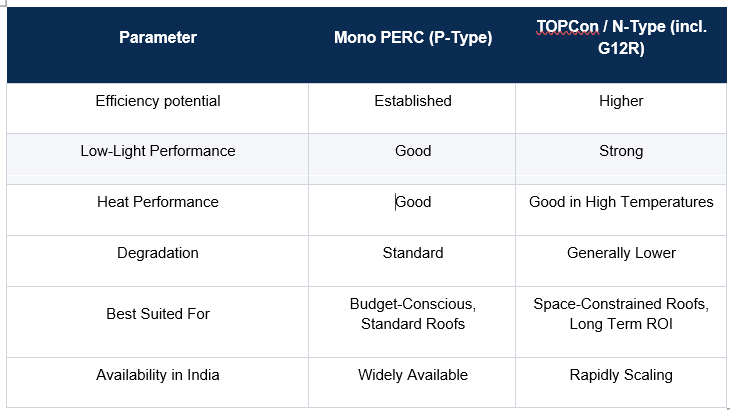
Neither is "wrong" for every situation but for a roof where every panel counts, N-Type modules like G12R generally deliver more usable electricity per square foot over the system's life.
Does Bifacial Make Sense for Your Roof?
Bifacial solar panels can generate electricity from both the front and rear sides. The additional energy produced depends on how much sunlight reaches the rear side, the mounting arrangement, and the reflectivity of the surface below the panels. They may be useful in some rooftop installations, but the extra cost should be compared with the expected energy gain before making a decision.
Why Panel Efficiency Matters When Roof Space Is Limited?
For example, two solar panels of the same physical size may have different rated power outputs, and the higher-wattage panel can generate more electricity from the same roof area under comparable conditions. This can help homeowners with limited terrace space choose a suitable system without covering the entire roof. However, avoid suggesting that all apartments and villas need N-Type or TOPCon panels. Clarify that the best choice depends on available roof area, budget, shading conditions, energy requirements, and the specifications of the individual panel. Encourage readers to compare efficiency, degradation rate, temperature coefficient, and warranty terms before making a purchase.
Sizing Your System: How Many Panels Do You Need
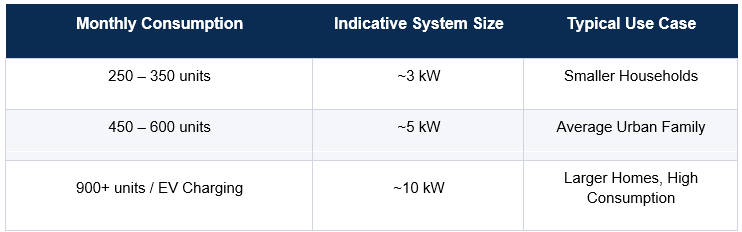
These system sizes are indicative and may not suit every household. Your ideal capacity depends on your actual electricity usage, local sunlight conditions, available roof space, and applicable utility rules. Ask a qualified installer to assess your requirements before choosing a system.
Understanding Cost: Price Per Watt Isn't the Full Picture
Solar pricing depends on cell technology, system capacity, inverter type, installation complexity and location. Rather than focusing only on the price per watt, homeowners should compare the total installed cost and the value offered by each system. A more reliable approach is to:
- Get your rooftop and average electricity bill assessed to determine the right system size
- Compare itemized quotes for Mono PERC and TOPCon panels, including expected energy generation and long-term value
- Check what the total price includes, such as solar panels, inverter, mounting structure, DC and AC wiring, protection devices, installation charges and applicable taxes
- Review inverter specifications, installation quality, product and performance warranties, and any additional charges before finalizing the purchase
- Confirm whether the proposed equipment and installation meet the applicable ALMM requirements and current government scheme rules
PM Surya Ghar: Muft Bijli Yojana offers Central Financial Assistance to eligible residential consumers, subject to current eligibility criteria and the prescribed application and installation process. Not every solar purchase automatically qualifies for a subsidy. Before proceeding, verify the latest subsidy conditions, approved equipment requirements and application procedure on the official PM Surya Ghar portal.
Why the Manufacturer Behind the Module Matters
A solar panel is expected to run for 25+ years, so the manufacturer's track record matters as much as the datasheet. Premier Energies has manufactured solar cells and modules in India since 1995. Its integrated capacity has scaled to 10.9 GW of solar cells and 11.1 GW of modules, all ALMM-certified and produced in-house including the G12R TOPCon line with Zero Busbar architecture and AI enabled defect detection during production. Independent benchmarks back this up: Premier Energies was named a Top Performer in Kiwa's 2025 PV Module Reliability Scorecard and ranked among the top 13 global module manufacturers by Terawatt PV.
That ALMM certification isn't just a compliance checkbox. It's the government's own verification that a manufacturer's cells and modules are made in India to specified quality standards, and it's what makes a module eligible for schemes like PM Surya Ghar in the first place. When evaluating any brand, checking for ALMM listing alongside these kinds of independent, third-party certifications is a more reliable filter than a spec sheet or marketing claim in isolation.
Checklist Before You Decide
- Confirm the cell technology (Mono PERC or TOPCon/N-Type) and why it fits your roof
- Check efficiency rating and expected degradation over 25 years
- Confirm ALMM listing and domestic, in-house manufacturing
- Get a written breakdown of module, inverter and installation costs
- Check subsidy eligibility under PM Surya Ghar
- Look for independent quality benchmarks, not just brand claims

Key Takeaways
- Bangkok’s river and canals offer cultural context that cannot be understood from the road alone.
- A smaller, privately guided boat creates space for observation without turning communities into spectacle.
- Early morning and late afternoon bring gentler light, cooler air and a more contemplative pace
- The most meaningful journeys connect what is seen on the water with the people, crafts and histories beside it.
Frequently asked questions


The best solar panel depends on your electricity needs, available roof space, budget, and local conditions. N-Type TOPCon panels may be suitable when higher efficiency is a priority, while Mono PERC panels can offer good value for some installations. Compare the specifications, warranties, and expected energy output of individual products before choosing.
TOPCon panels generally offer higher efficiency and lower degradation rates than conventional Mono PERC panels, while their performance under high temperatures depends on the specific module’s temperature coefficient. Mono PERC panels may have a lower upfront cost. Compare efficiency, temperature coefficient, degradation rate, warranty, and price using the actual product datasheets rather than relying on technology labels alone.
Subsidy eligibility depends on the current PM Surya Ghar scheme guidelines, applicable ALMM requirements, module specifications, and the prescribed installation process. Not every solar panel purchase automatically qualifies for financial assistance. Check the latest requirements on the official PM Surya Ghar portal and confirm eligibility with your registered vendor before finalizing your system
Yes, solar panels continue generating electricity during cloudy and monsoon conditions, but output generally decreases when sunlight intensity drops. Actual generation depends on cloud cover, rainfall, shading, panel orientation, and system specifications. Homeowners should consider seasonal variations when estimating annual solar generation.

